
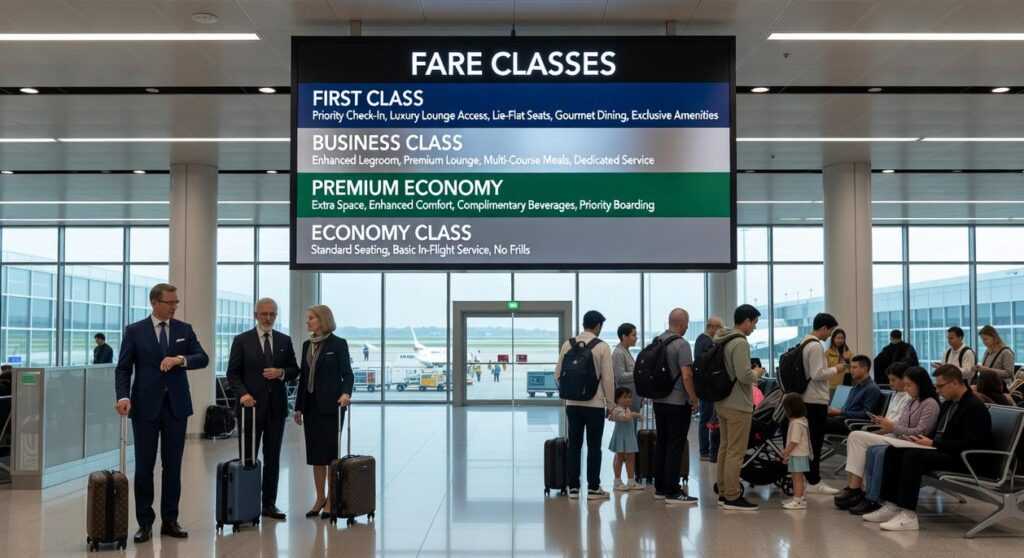
If you’ve ever searched for a flight and wondered why prices change by the minute—or what you’re actually getting with each ticket type—you’re not alone. Travelers today want more than just cheap fares; they want smart booking strategies, clarity on ticket options, and confidence they’re not overpaying. This guide to airline fare classes explained is designed to do exactly that.
We break down what each fare class really means, how it affects flexibility, upgrades, baggage, and cancellations, and how you can use that knowledge to your advantage. Instead of relying on confusing airline jargon, you’ll get clear, practical insights that help you compare options and book strategically.
Our guidance is built on in-depth analysis of airline pricing structures, real booking data, and proven fare optimization tactics used by frequent travelers. By the end, you’ll understand how fare classes work—and how to turn that knowledge into better flights for less money.
Ever noticed the single letter—Y, K, Q—on your boarding pass? That’s your fare class, and it quietly controls price, flexibility, and upgrade odds. Think Economy cabin A vs Economy cabin B: same seat, different rules.
Y vs K comparison:
- Y: Full-fare economy, refundable, upgrade priority.
- K: Discounted fare, change fees, lower mileage earnings.
- Q: discount, flexibility.
Most travelers compare cabins. Savvy travelers compare letters. One may allow free changes; another locks you in (and charges for breathing near the counter). In this guide to airline fare classes explained, you’ll see how codes create big differences—and smarter bookings
What Are Fare Classes? A Look Behind the Curtain
If you’ve ever wondered why the person next to you paid half (or double) what you did for the same flight, the answer lies in fare classes. A fare class—also called a booking code—is a sub-category within a main cabin. Think of it as the airline’s internal label for a specific ticket type. While you might see “Economy” on your boarding pass, your ticket could actually be “M,” “G,” or “Y” class behind the scenes.
Here’s why that matters to you: fare classes determine flexibility, upgrade eligibility, mileage earnings, and change fees. In other words, they control the fine print that can either save you money—or cost you later.
Airlines use this system as part of yield management, a pricing strategy designed to maximize revenue. They release dozens of fare classes on the same flight at different price points. For example, a “Y” class economy ticket is often fully refundable, while a deeply discounted “G” class ticket may come with strict change penalties.
Understanding airline fare classes explained in plain terms gives you leverage. When you know the difference between cabin (where you sit) and class (what you bought), you can book smarter, avoid surprise restrictions, and choose tickets that actually fit your travel plans.
Decoding the Fare Class Alphabet Soup: From First to Economy

If you’ve ever stared at a boarding pass and wondered why your seat says “K” instead of “Y,” you’re not alone. Airline booking systems use single-letter fare codes to signal price, flexibility, and perks. Think of it as shorthand for how many strings are attached (and how much you paid to cut them).
The General Hierarchy
As a rule, letters at the beginning of the alphabet—like F, J, and Y—usually represent full-fare, flexible tickets. Letters further down often mean more discounted and restrictive fares. It’s not universal, but it’s a reliable starting point when decoding airline fare classes explained in plain English.
First & Business Class (F, A, J, C, D, I)
Even premium cabins have layers. F often means full-fare First Class with maximum flexibility. A may be discounted First. In Business, J is typically full-fare, while I is a discounted Business bucket—frequently used for upgrades or award tickets.
Practical tip: If you’re aiming for an upgrade using miles, look for “I” availability before transferring points. That’s often the inventory airlines release for upgrades.
Premium Economy (W, R)
Premium Economy sits between Business and standard Economy. Fare codes like W or R usually offer wider seats, extra legroom, and better meal service. It’s a popular sweet spot for long-haul flights (your back will thank you).
Economy Class (Y, B, M, H, K, Q, V, S, N, G, O)
This is where things get layered:
- Full-Fare Economy (Y, B): Most flexible, often refundable, and commonly eligible for instant upgrades.
- Standard/Discounted Economy (M, H, K, Q): Mid-range pricing with moderate change fees and mileage earning.
- Deep-Discount Economy (N, G, O): Cheapest fares. Typically non-refundable and may earn reduced miles.
Before booking a “deal,” compare change fees and baggage rules. A rock-bottom O fare plus a hefty bag charge can erase savings—review what to know about baggage policies before purchasing tickets.
In short, always check the fare letter before clicking “purchase.” Two seats in the same row can come with very different rules—and very different flexibility when plans change.
Why This Single Letter Matters More Than You Think
That single letter on your ticket—Y, B, M, or G—can quietly determine how flexible, rewarding, and upgrade-friendly your trip will be. In other words, airline fare classes explained in plain terms can save (or cost) you hundreds.
First, ticket price and flexibility. Generally, higher fare classes cost more but allow free changes, cancellations, or refunds. For example, if you book a Y fare for $450 instead of a restrictive G fare for $320, you might avoid a $200 change fee later. So before clicking “basic economy,” ask yourself: might my plans shift?
Next, frequent flyer miles. Not all tickets earn equally. A Y fare may earn 150% of miles flown, while a G fare might earn just 25%—or zero. On a 2,000-mile round trip, that’s 3,000 miles versus 500. Over time, that difference affects both redeemable miles (used for free flights) and elite status qualification (the threshold that unlocks perks). Pro tip: Always check the airline’s earning chart before booking—especially for partner flights.
Finally, upgrade priority. Airlines rank upgrade lists partly by fare class. Higher fares like Y, B, or M sit above deeply discounted tickets. Additionally, some lower fares aren’t eligible for mileage or certificate upgrades at all. If you’re chasing that lie-flat seat, booking one step up can dramatically improve your odds (yes, even ahead of someone with similar status).
While some argue price should be the only factor, flexibility, miles, and upgrade potential often deliver far greater long-term value.
First locate your fare class during booking: on most airline websites it appears under “Details” or a “Fare Rules” link next to the price. The fare class is a single letter like Y, K, or G, which determines mileage earnings and upgrade eligibility. Think of it like choosing Hogwarts houses—same flight, different perks. If you want more control, tools like ITA Matrix or ExpertFlyer let you search by specific codes. Now, consider strategy: is paying $50 more for a K fare over G worth double miles and upgrade odds? For many, yes. That’s airline fare classes explained simply clearly.
That single letter on your ticket? It quietly controls the price you pay, the miles you earn, and the perks you enjoy. In my view, ignoring it is like skipping the fine print on a contract. Once you understand airline fare classes explained, you book smarter and travel better consistently.
Once you’ve grasped the nuances of airline fare classes and found the best deal for your journey, you’ll be ready to plan your next adventure, whether it’s a tropical escape to Cawuhao Island from Bangkok or another exciting destination – for more details, check out our How To Get To Cawuhao Island From Bangkok.
Ready to Book Smarter and Travel Better
You came here to make sense of confusing airfare pricing, booking strategies, and destination planning—and now you have the clarity to move forward with confidence. From timing your purchase to understanding airline fare classes explained, you’re no longer guessing. You’re making informed travel decisions.
The real frustration with booking flights isn’t just high prices—it’s not knowing if you could have paid less or chosen better. Overpaying, missing out on upgrades, or selecting the wrong fare type can quietly drain your travel budget and limit your experience.
Now you know how to spot smarter fares, optimize your booking window, and uncover better route and cabin options. The next step is simple: put these strategies into action on your very next search.
Don’t let confusing pricing cost you another trip opportunity. Start applying these fare optimization tactics today, compare your options strategically, and book with confidence. The difference between an average deal and a great one is knowing what to look for—now you do.

 Jessica Adamskateel writes the kind of tweak-based fare optimization tactics content that people actually send to each other. Not because it's flashy or controversial, but because it's the sort of thing where you read it and immediately think of three people who need to see it. Jessica has a talent for identifying the questions that a lot of people have but haven't quite figured out how to articulate yet — and then answering them properly.
They covers a lot of ground: Tweak-Based Fare Optimization Tactics, Hidden Gems, Destination Planning Strategies, and plenty of adjacent territory that doesn't always get treated with the same seriousness. The consistency across all of it is a certain kind of respect for the reader. Jessica doesn't assume people are stupid, and they doesn't assume they know everything either. They writes for someone who is genuinely trying to figure something out — because that's usually who's actually reading. That assumption shapes everything from how they structures an explanation to how much background they includes before getting to the point.
Beyond the practical stuff, there's something in Jessica's writing that reflects a real investment in the subject — not performed enthusiasm, but the kind of sustained interest that produces insight over time. They has been paying attention to tweak-based fare optimization tactics long enough that they notices things a more casual observer would miss. That depth shows up in the work in ways that are hard to fake.
Jessica Adamskateel writes the kind of tweak-based fare optimization tactics content that people actually send to each other. Not because it's flashy or controversial, but because it's the sort of thing where you read it and immediately think of three people who need to see it. Jessica has a talent for identifying the questions that a lot of people have but haven't quite figured out how to articulate yet — and then answering them properly.
They covers a lot of ground: Tweak-Based Fare Optimization Tactics, Hidden Gems, Destination Planning Strategies, and plenty of adjacent territory that doesn't always get treated with the same seriousness. The consistency across all of it is a certain kind of respect for the reader. Jessica doesn't assume people are stupid, and they doesn't assume they know everything either. They writes for someone who is genuinely trying to figure something out — because that's usually who's actually reading. That assumption shapes everything from how they structures an explanation to how much background they includes before getting to the point.
Beyond the practical stuff, there's something in Jessica's writing that reflects a real investment in the subject — not performed enthusiasm, but the kind of sustained interest that produces insight over time. They has been paying attention to tweak-based fare optimization tactics long enough that they notices things a more casual observer would miss. That depth shows up in the work in ways that are hard to fake.