

Most travelers believe nonstop flights always cost more and layovers always save money. In reality, airline pricing is far more complex. Understanding the stopover flight pricing impact can mean the difference between overpaying and unlocking serious savings. This guide explores how airlines calculate fares, why certain connecting routes undercut direct options, and when stopovers actually increase your total cost. We’ve analyzed real booking data, fare rules, and routing strategies to break down what’s really happening behind the scenes. You’ll learn exactly why stopovers can be cheaper—or more expensive—and how to strategically secure the best fare for your next trip.
Why a Detour Can Decrease Your Fare: The Core Economics of Connecting Flights
By understanding how flexible stopovers can lower ticket prices, travelers can further enhance their savings while planning their adventures, as detailed in our guide on Creating a Flexible Itinerary for Multi-City Trips.
At first glance, it feels backward. Why would flying farther cost less? The answer starts with the hub-and-spoke model—a network system where airlines route passengers through central “hub” airports instead of offering nonstop flights between every city pair. Think of Atlanta for Delta or Dubai for Emirates. Rather than operate dozens of thin direct routes, airlines funnel travelers through hubs to consolidate demand (like a highway interchange for the skies).
Now consider competition and demand. On a marquee route like New York to London, multiple airlines battle for the same high-paying travelers. However, airlines also compete for passengers starting in smaller cities—say, Boston to London via New York. To win that customer, they may discount the connecting itinerary. In other words, your inconvenience becomes your bargaining chip.
This ties into yield management—the algorithm-driven strategy airlines use to maximize revenue per seat (MIT researchers have documented how dynamic pricing models drive airline profitability). A discounted seat filled by a flexible traveler is better than an empty one. That’s the stopover flight pricing impact in action.
Connecting passengers also help fill planes from hubs to smaller “spoke” cities, keeping those routes profitable.
So what should you do? First, always compare nonstop and one-stop options—even if you prefer direct flights. Second, search nearby departure airports; pricing shifts dramatically. Finally, if time allows, choose a connection strategically (bonus: you might explore a new city—accidental tourism isn’t the worst problem to have).
Direct is convenient. Connecting is often cheaper. Pick based on what you value more: time or savings.
When Layovers Inflate the Price: The Exceptions to the “Cheaper” Rule
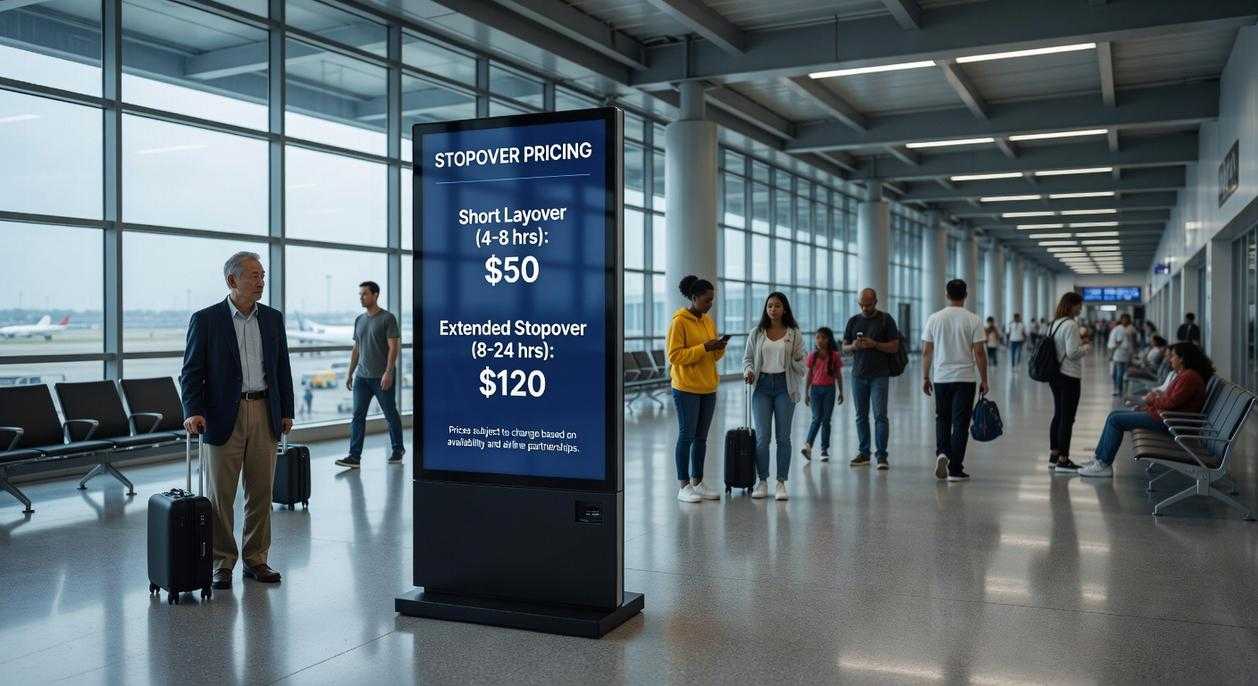
We’ve all heard it: connecting flights are ALWAYS cheaper. Not quite. That rule works often—but not universally.
High-Demand Hubs & Peak Times
If your layover runs through Atlanta at Thanksgiving or Heathrow in July, you’re stepping into surge pricing territory. Airlines use dynamic pricing (real-time fare adjustments based on demand), and busy hubs during peak windows can inflate fares beyond a nonstop alternative. The stopover flight pricing impact becomes obvious when every seat in and out of that airport is in demand (think Taylor Swift tour dates-level chaos).
Airport Taxes and Fees
Each airport charges passenger facility fees—government-approved surcharges funding infrastructure. Two stops? Potentially double the fees. It may only be $20–$60 extra, but that chips away at the “budget” advantage fast.
Multi-Airline Itineraries
Booking separate tickets on non-partner airlines removes bundled pricing benefits. You’re buying two contracts, not one coordinated trip. Miss the first leg? The second airline doesn’t care. Pro tip: always compare a single-ticket option before splitting bookings.
Lack of Competition
On obscure routes with one connecting carrier, monopoly pricing kicks in. No rivals, no incentive to discount.
Want smarter trade-offs? Read our guide on adjusting cabin choices to maximize flight value.
•
•
Fare Optimization Tactics: How to Strategically Hunt for Stopover Deals
Finding cheaper flights isn’t about luck—it’s about understanding how airline pricing actually works. Let’s break down a few often-confusing tactics into plain English.
Master Search Engine Filters
First, avoid the default “best” result. Most flight tools automatically prioritize convenience. Instead, manually compare Nonstop, 1 stop, and 2+ stops options. A stopover simply means you change planes before reaching your final destination. Sometimes that extra stop cuts the fare by hundreds of dollars; other times it saves only $20 (hardly worth sprinting through an airport at midnight). The key is checking the stopover flight pricing impact before assuming it’s a bargain.
The “Hidden City” Strategy
Next, there’s the so-called hidden city ticket. This means booking a flight where your desired city is the layover, then skipping the final leg. It sounds clever—and sometimes it is—but it’s risky. Checked bags go to the ticketed final destination, and airlines may penalize repeat offenders. Think of it as a travel loophole, not a guaranteed hack.
Flexibility Is Key
Meanwhile, consider nearby airports. Major hubs often charge premium prices. Flying into a smaller airport and taking a train could lower costs significantly. (Yes, it’s the “fly into Oakland, visit San Francisco” move.)
Embrace the Long Layover
Finally, longer layovers—12 to 24 hours—can unlock surprising discounts. Many booking tools let you filter by layover duration. As a bonus, you get a mini side trip built into your itinerary. Not bad for the price of patience.
Beyond the Ticket: Calculating the True Cost of a Layover
First, consider the value of your time. Economists define opportunity cost as what you give up to gain something else. If you value your time at $25 per hour, a six-hour layover “costs” $150—suddenly that $50 savings looks flimsy.
Then factor in incidental spending. Airport meals often cost 20–30% more than city prices (BTS data), and boredom shopping is real (those neck pillows multiply).
Moreover, stopover flight pricing impact rarely accounts for disruption risk. Connections double delay exposure, increasing chances of hotel or rebooking fees. Finally, complex routes raise lost baggage odds, adding stress and replacement costs.
Your New Flight Plan for Smarter Savings
You came here looking for clarity on why flight prices feel so unpredictable—and now you know. A stopover isn’t just an inconvenience; it’s a lever you can pull. Understanding the stopover flight pricing impact puts you back in control of your travel budget. The frustration of watching fares jump or make no sense fades when you compare direct and connecting options with purpose.
Don’t let confusing pricing cost you more than it should. On your next search, filter by number of stops, compare both routes, and calculate the real savings. Smart travelers don’t accept default options—they challenge them. Start optimizing your next booking today and turn flexibility into real money saved.

 Jessica Adamskateel writes the kind of tweak-based fare optimization tactics content that people actually send to each other. Not because it's flashy or controversial, but because it's the sort of thing where you read it and immediately think of three people who need to see it. Jessica has a talent for identifying the questions that a lot of people have but haven't quite figured out how to articulate yet — and then answering them properly.
They covers a lot of ground: Tweak-Based Fare Optimization Tactics, Hidden Gems, Destination Planning Strategies, and plenty of adjacent territory that doesn't always get treated with the same seriousness. The consistency across all of it is a certain kind of respect for the reader. Jessica doesn't assume people are stupid, and they doesn't assume they know everything either. They writes for someone who is genuinely trying to figure something out — because that's usually who's actually reading. That assumption shapes everything from how they structures an explanation to how much background they includes before getting to the point.
Beyond the practical stuff, there's something in Jessica's writing that reflects a real investment in the subject — not performed enthusiasm, but the kind of sustained interest that produces insight over time. They has been paying attention to tweak-based fare optimization tactics long enough that they notices things a more casual observer would miss. That depth shows up in the work in ways that are hard to fake.
Jessica Adamskateel writes the kind of tweak-based fare optimization tactics content that people actually send to each other. Not because it's flashy or controversial, but because it's the sort of thing where you read it and immediately think of three people who need to see it. Jessica has a talent for identifying the questions that a lot of people have but haven't quite figured out how to articulate yet — and then answering them properly.
They covers a lot of ground: Tweak-Based Fare Optimization Tactics, Hidden Gems, Destination Planning Strategies, and plenty of adjacent territory that doesn't always get treated with the same seriousness. The consistency across all of it is a certain kind of respect for the reader. Jessica doesn't assume people are stupid, and they doesn't assume they know everything either. They writes for someone who is genuinely trying to figure something out — because that's usually who's actually reading. That assumption shapes everything from how they structures an explanation to how much background they includes before getting to the point.
Beyond the practical stuff, there's something in Jessica's writing that reflects a real investment in the subject — not performed enthusiasm, but the kind of sustained interest that produces insight over time. They has been paying attention to tweak-based fare optimization tactics long enough that they notices things a more casual observer would miss. That depth shows up in the work in ways that are hard to fake.